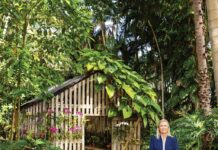


Six years ago, the Preservation Foundation of Palm Beach decided it was time to give the town’s historic Little Red Schoolhouse some tender loving care. Built in 1886, the one-room landmark has long been home to the Preservation Foundation’s Living History program, which has helped area fourth graders imagine what it was like to attend school in the late-nineteenth century since 1990. But its location in a flood plain at Phipps Ocean Park subjected it to wind and water damage over the years, necessitating the structure’s renovation and relocation closer to a 22-foot-high dune that would protect it from flooding and high winds.
“But then we looked around [Phipps Ocean Park] and decided, well, this park could really use some help, too,” says Betsy Shiverick, chair of the Preservation Foundation’s board of trustees.
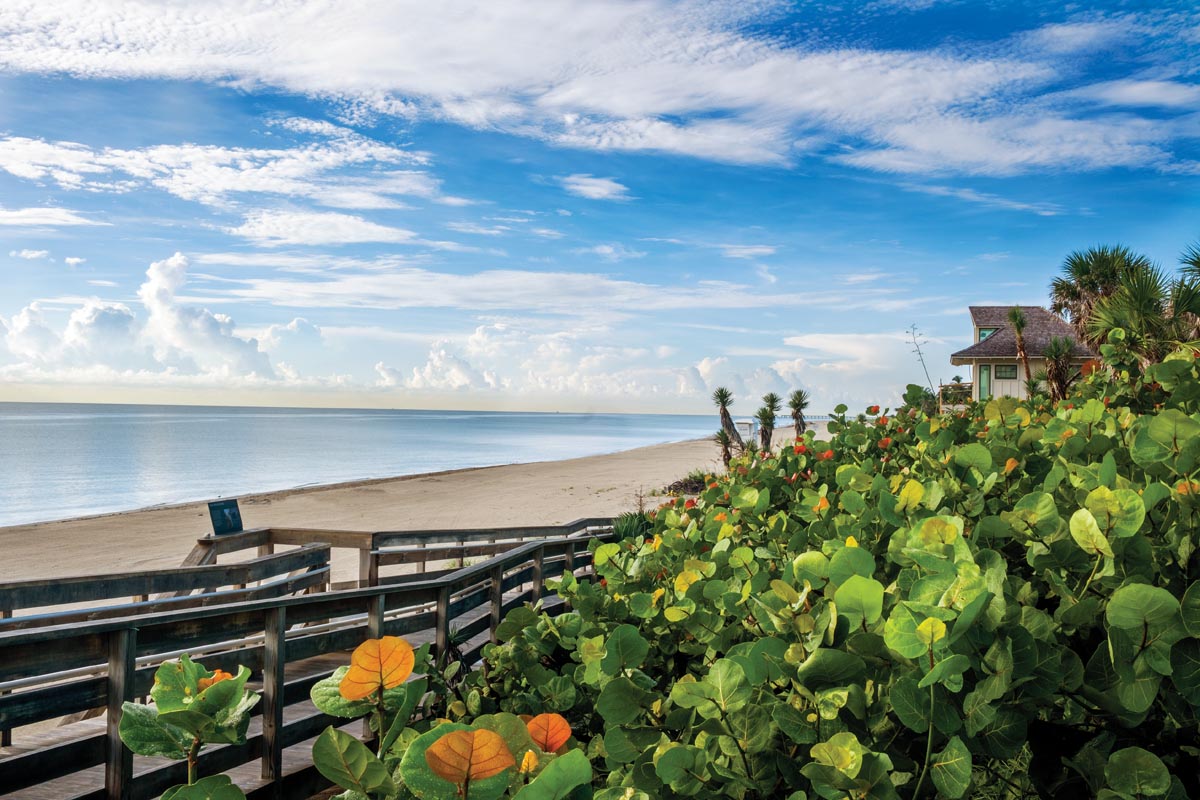
“Some help” is a bit of an understatement. The Preservation Foundation dove headlong into the most ambitious project in its 46-year history, spearheading a $31 million restoration that has not only enhanced the 20-acre property (the majority of which is oceanfront) but made it more ecologically resilient. An outpouring of private philanthropy seeded the vision, which included a landscape design by internationally acclaimed landscape architect Raymond Jungles.

“It was brave of the foundation to step up and say this needed to be done,” says Danielle Del Sol, the Preservation Foundation’s chief executive officer and president. “It was going to require a massive amount of money and working closely with the town and Raymond on honing a vision for what the park should be restored to. I’ve been on the board of the National Trust for Historic Preservation for years and in the field for almost 20 years. This was not a typical historic preservation project, but we are not a typical historic preservation organization.”
In 1948, the Phipps family donated 1,200 feet of oceanfront property to the Town of Palm Beach. The land, however, was never updated, and it became largely overgrown and underused.
“I had never visited Phipps Ocean Park much at all before we started this,” Shiverick says. “I was very surprised when we first started talking about it and people told me they used to go there to swim and play at the park. … There was a real soft spot for the park among older Palm Beachers who had a lot of memories there.”

If the Phipps family wanted the park to be a beautiful place where visitors could play and learn, then the Preservation Foundation aimed to finally make it so.
“We always [approach projects] with history in mind,” Shiverick explains. “All our projects are done with the utmost eye to high quality. It’s what we do. We use our archives and our staff’s expertise to get things the way they should have been.”
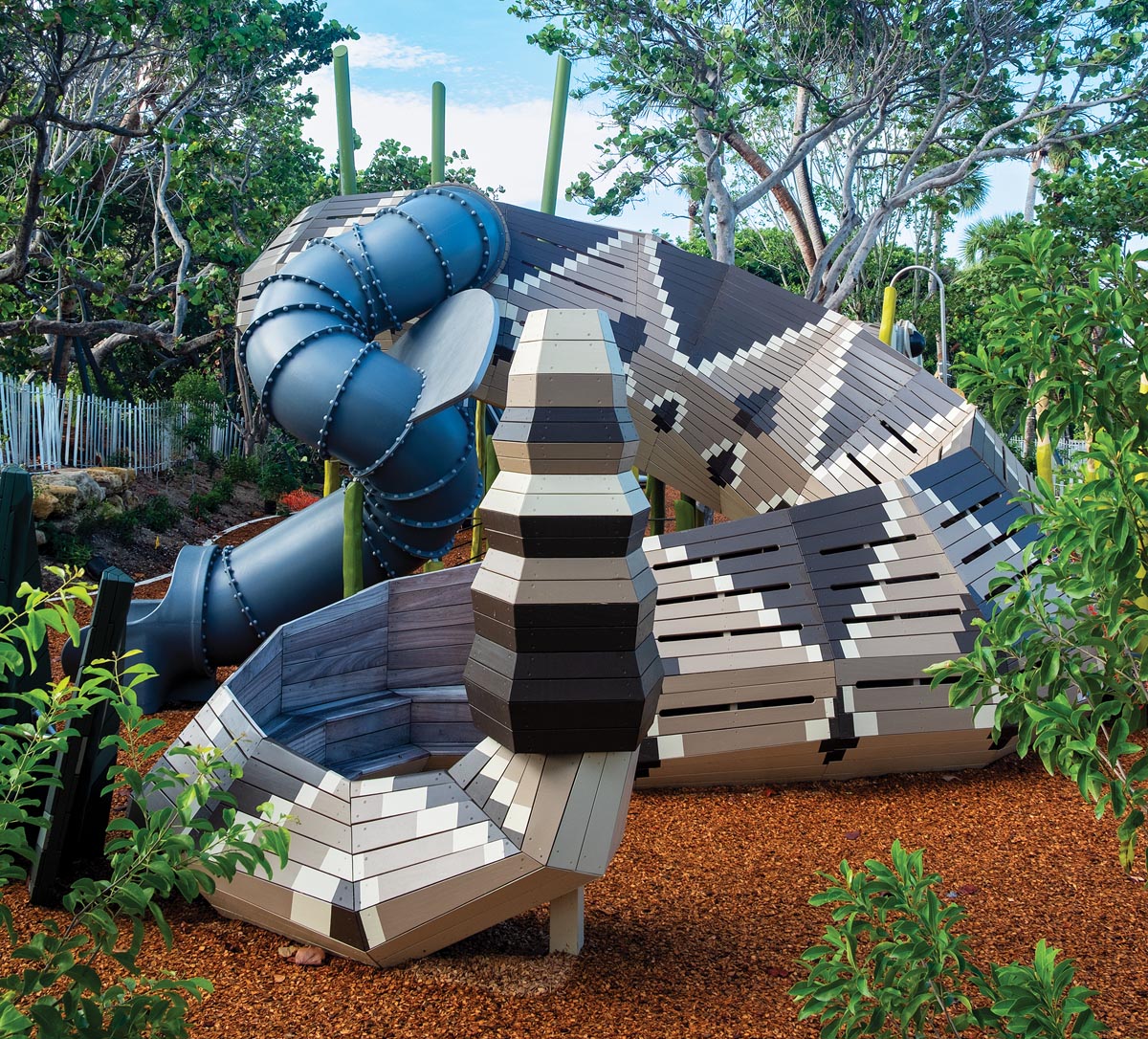
The Preservation Foundation worked in partnership with the Town of Palm Beach on the park’s revitalization, and Shiverick says the project began with many meetings with town officials and countless hours of planning and design. Every decision centered around the historical accuracy of the site’s ecology, from the addition of approximately 80,000 native plants to the new playground structures that depict the region’s native animals.
The Preservation Foundation also had a lot of buy-in from locals who wanted to support a refreshed park. The organization raised funds through a series of intimate dinners starting in 2021 that highlighted the benefits of the park to the community. After those initial dinners, potential donors were invited to tour the site and see the vision for themselves. Shiverick believes the success of the Palm Beach Par-3 Golf Course revitalization nearby helped reinforce what can happen when public spaces are made more attractive and usable. Jungles’ reputation also added gravitas to the project. When conceptualizing, he looked to the park’s past to forge its future.
“We researched all the old photographs we could find of the site,” Jungles says. “We found that it was going to be a Beaux Arts–style park with spectacular swimming pools, but then the fire station came in. If that hadn’t happened, it probably would have become something like Vizcaya or something that would have had to be preserved. That was the biggest surprise.”
Though some of the native species Jungles wanted to use already existed at the park, he says the goal was to establish a landscape that would evolve into a beautiful natural woodland that felt like it had always been there. “Doing this is all about how you use the bigger elements and play off of them by putting the right plants in the right spots,” he says. “It really is a tough shoreline. Even the sea grapes get burned back to nothing when a cold front comes through. So, you have to be a little bit of a meteorologist, scientist, and designer.”

After clearing out the tangle of plants on the site, Jungles created a native wildflower garden, dune and hammock ecosystems, rain gardens, and panoramic overlooks.
“We found that there was a ridge right at the beach that was going unused,” Shiverick says. “There were no views of the ocean, just overgrown plants. And we decided that’s completely wrong for this space. We should have a path up there that leads you along the water, where you can see the water and rest by [it] in new pavilions. The whole topography needed to be restudied, and that’s what Raymond did so well.”
The Preservation Foundation’s horticulture team sourced the native plants used on-site from local nurseries and an off-site nursery it created for the project. The plants aren’t just for aesthetics, Jungles says. They filter stormwater, reduce irrigation needs, stabilize dunes, strengthen the coastline against storms and sea level rise, and provide habitats for birds, butterflies, and other pollinators.

“We relocated a lot of big trees from the site because they were planted too closely together,” Jungles says. “Then we brought in large native trees and aesthetically designed the garden in a way that was still scientific. We’ve been adding a bit more flowering plants for the bees, butterflies, and dragonflies. It has been fun and we’ve learned a lot about plants that I thought were native to the area but aren’t.”
A new 2,400-square-foot Coastal Restoration Center aims to clear up some of that confusion. It will serve as a native plant nursery for local landscape projects and an educational facility where visitors can learn how these plants protect Florida’s coastline. A schoolyard garden and an outdoor classroom add to the educational opportunities, as does a playground by Danish playground designer Monstrum.
“I hope this will be received with the love that it was put together with,” Jungles says. “I think it can really enrich a lot of the citizens’ lives and bring them a little closer to nature.”

Following Phipps Ocean Park’s grand opening November 19, visitors will also have access to new picnic terraces, ADA-accessible pathways, a lifeguard stand, and pickleball courts. In the decades to come, the park’s landscape will mature, providing the town with a sustainable shoreline rich with coastal wildlife and a must-visit destination for future generations.
“The island has grown so much in the past 20 years and gained so many new residents,” says Pauline Pitt, the Preservation Foundation’s board chairman emeritus. “This will be an additional way for them to enjoy their life in Florida. They can go to this beautiful beach and enjoy the park and all its native plants. It’s going to be a wonderful place to picnic and swim with the kids.”
For Shiverick, the park is an example of the good that can happen when people work together and agree on a way forward.
“It wasn’t always easy, but because there was such a unified effort, this project was a success,” Shiverick says. “It got done on time and on budget. We’re very proud of that, and we think everybody who has been involved in this is proud of it too. We started this project from scratch. We came together, worked together, raised the money, and created a fantastic plan. And we did it for the good of the community.”

The Plants of Phipps Ocean Park
Learn more about some of what’s growing on-site now
Trees
Strangler fig: The strangler fig is an important part of the canopy in a maritime hammock, provides shelter and food for birds, and is a host plant for the ruddy daggerwing butterfly.
White mangrove: As one of three species of mangroves present at the park, the white mangrove stabilizes the shoreline and provides habitat for coastal species.
Grasses
Elliott’s lovegrass: This small, blueish grass helps to stabilize the soil in coastal areas and yields abundant seeds for birds.
Sea oats: As wind blows sand inland and partially buries this grass, the plant grows taller and its roots grow deeper, eventually forming a dune that protects the inland areas from high surf and storms.
Wildflowers, Vines, Succulents
Mouse’s pineapple: This sprawling vine provides nectar for more than 15 butterfly species.
Beach clustervine: See if you can spot the delicate white flowers of this endangered, low-growing coastal vine.
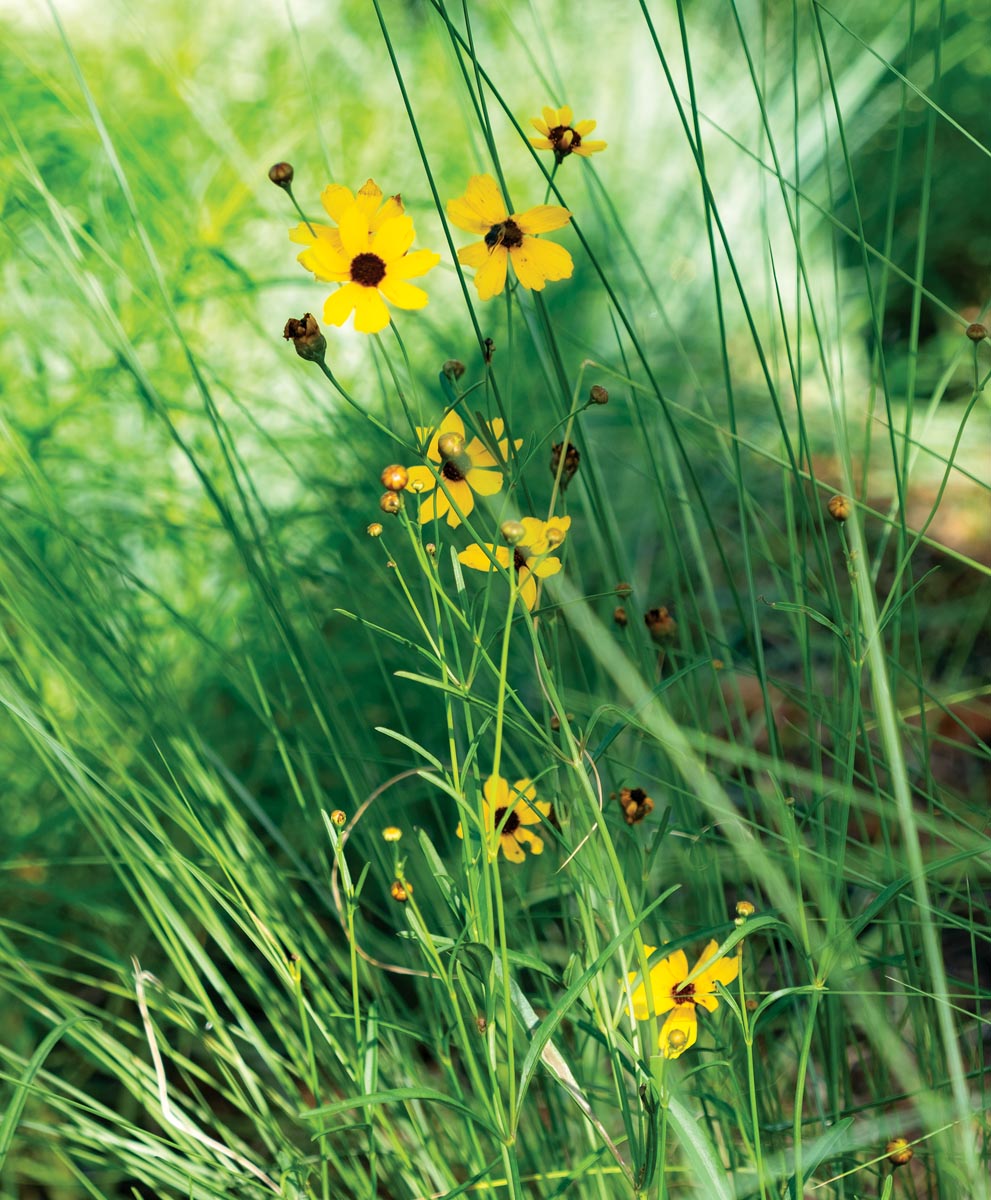
Black-eyed Susan: Many pollinators visit this small wildflower with yellow petals, and its seeds are often eaten by birds.
Prickly pear cactus: This variety of low-growing cactus boasts white spines, large yellow flowers, and purple fruit.
Shrubs
Florida Keys blackbead: This large coastal shrub with white or pink pom-pom-shaped flowers provides nectar for butterflies and seeds for birds.
Sea lavender: Look for this stunning coastal shrub with silvery blue-green leaves and clusters of white flowers that attract pollinators.
Pineland croton: Featuring thin leaves and creamy white flowers, this small coastal shrub is the only host plant for two types of butterflies, Bartram’s scrub-hairstreak and the Florida leafwing.