

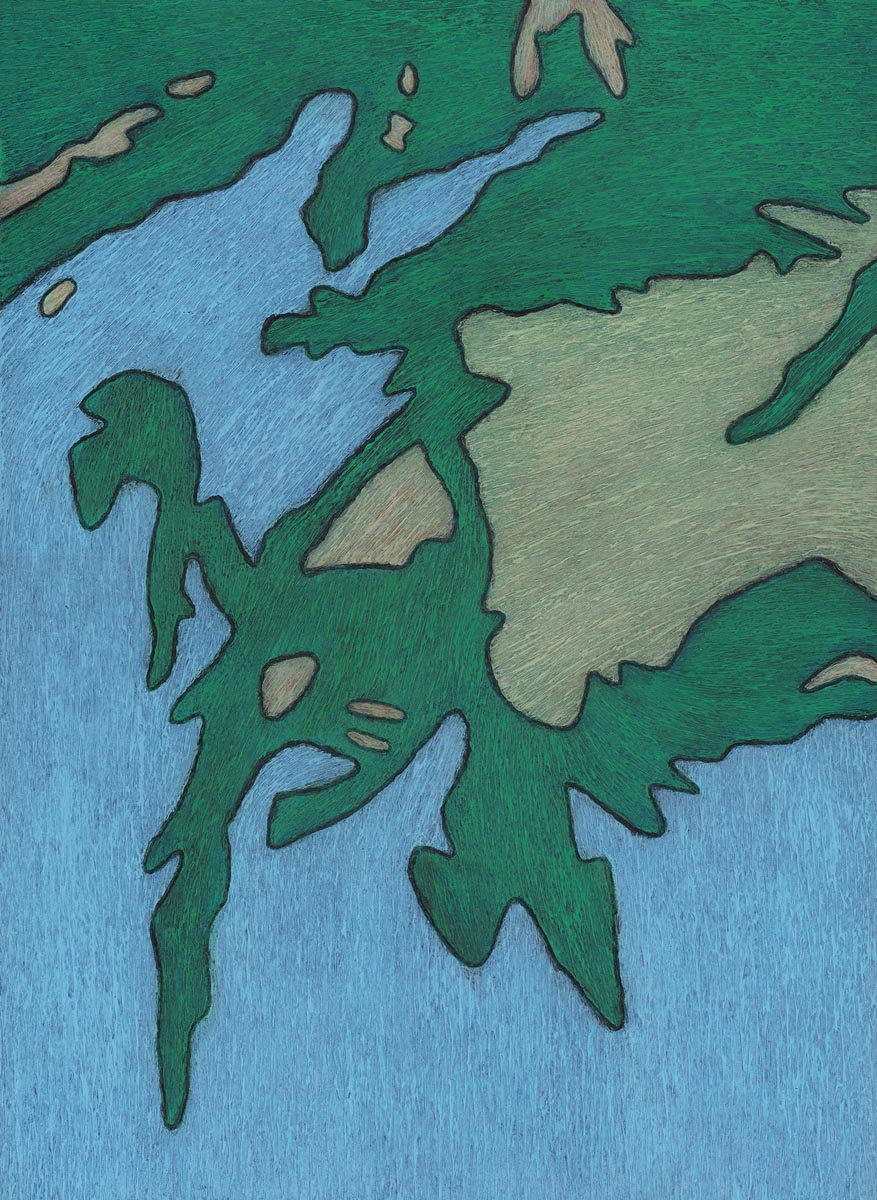
Beginning November 7, the Boca Raton Museum of Art will host “Tobi Kahn: Quest for the Essence,” a comprehensive survey of Kahn’s paintings, works on handmade paper, sculptures, and ceremonial objects created over the course of four decades.
From a young age, the New York–born Kahn understood that he saw the world through an artistic lens. “When I was 6 or 7, I was sitting on the radiator in our apartment on Cabrini Boulevard,” Kahn recounts. “It was raining, and I was seeing the bricks turning different colors. I was late to school, and I called my mother and said, ‘Mom, you’ve got to see this.’ She came and sat down next to me. I said to her, ‘Isn’t this beautiful? Look at how the bricks and the mortar change color when they get very wet.’ She said, ‘I never thought of it that way.’”

Since then, Kahn has endeavored to share his artistic language through his own work and as an educator. “I really believe we’re all put on this planet to do something,” he adds. “I was put here to make art.”
At the core of “Quest for the Essence” is the tenet of art’s connective and healing capabilities. Kahn’s abstract landscape paintings, for example, convey the healing power of nature, while his figurative, dancer-inspired works capture the healing to be found in movement. Connection is palpable across his ceremonial objects and models that serve as odes to his Jewish faith, small memorial pieces for mothers who have experienced miscarriages, and public monuments that invite real-time reflection. The exhibition will also feature tactile installations designed to engage children and people who are visually impaired or blind.