

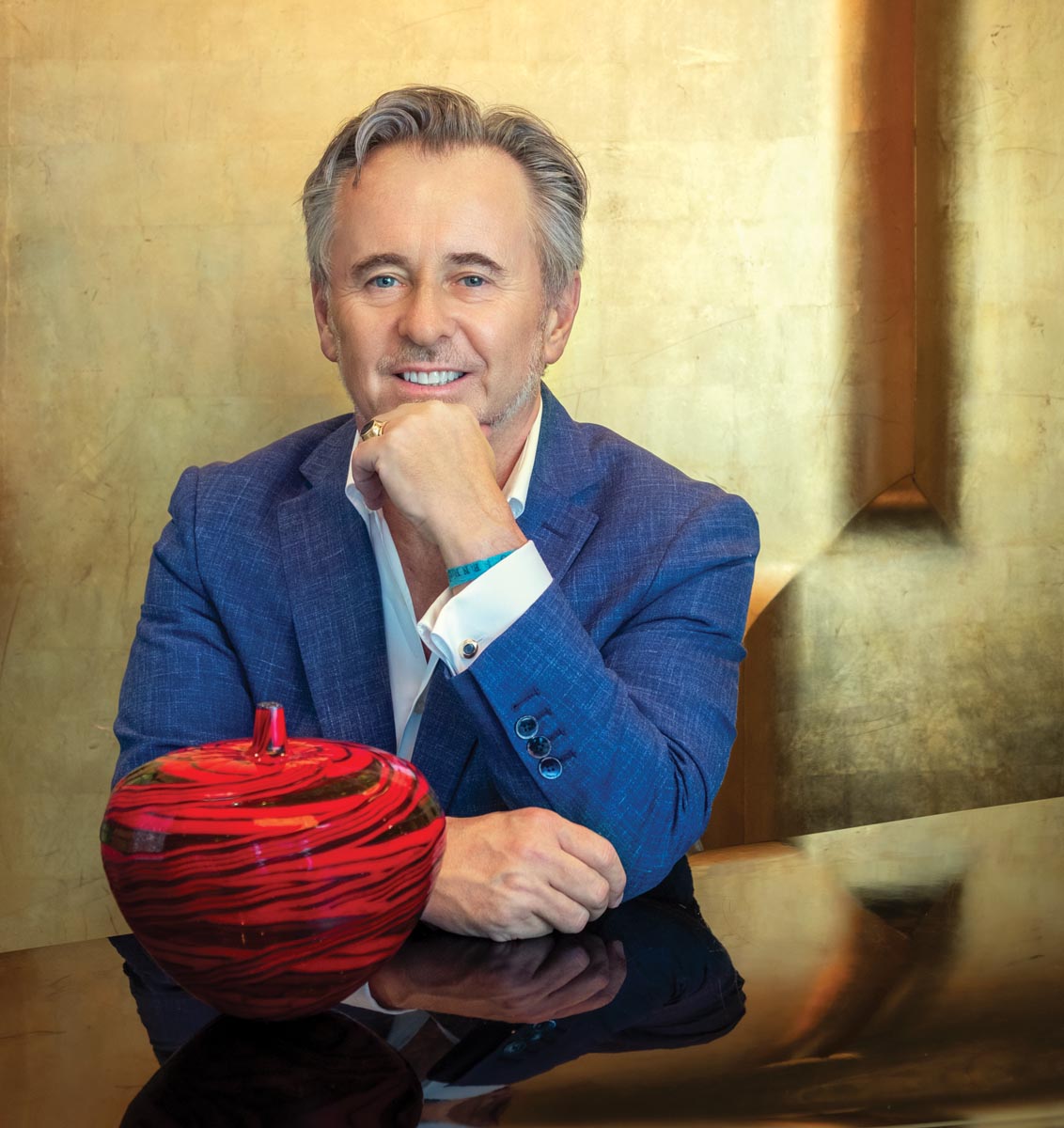
Ghislain d’Humières, director and CEO of the Norton Museum of Art in West Palm Beach, has assembled a very personal collection of his own: works of Venetian glass by Japanese master Yoichi Ohira. The curation process was a slow burn from his first purchase to the 10 exquisite pieces that eventually came together.
D’Humières was intrigued by the beauty of glass from an early age. Growing up in Paris, he saw the great collections of Egyptian, Greek, Roman, and Renaissance glass at the Louvre. His interest in various fine objects translated into a career as a specialist in eighteenth-century furniture for Sotheby’s in London and New York. He also studied gemology at the Gemological Institute of America, eventually becoming director of the gemology department at Christie’s auctions in Los Angeles, covering South America, the source of many gemstones. It later dawned on him that some glass artworks resemble gemstones.
“I didn’t really make the connection until a few years ago when I realized that there was a logic [as to] why I was attracted to glass,” d’Humières says. “It’s not that I like things that sparkle, but it’s the color—the color of the stone, the color of the art, the colors of the setting of the jewelry. I can’t help thinking that colored glass objects look like jewels.”
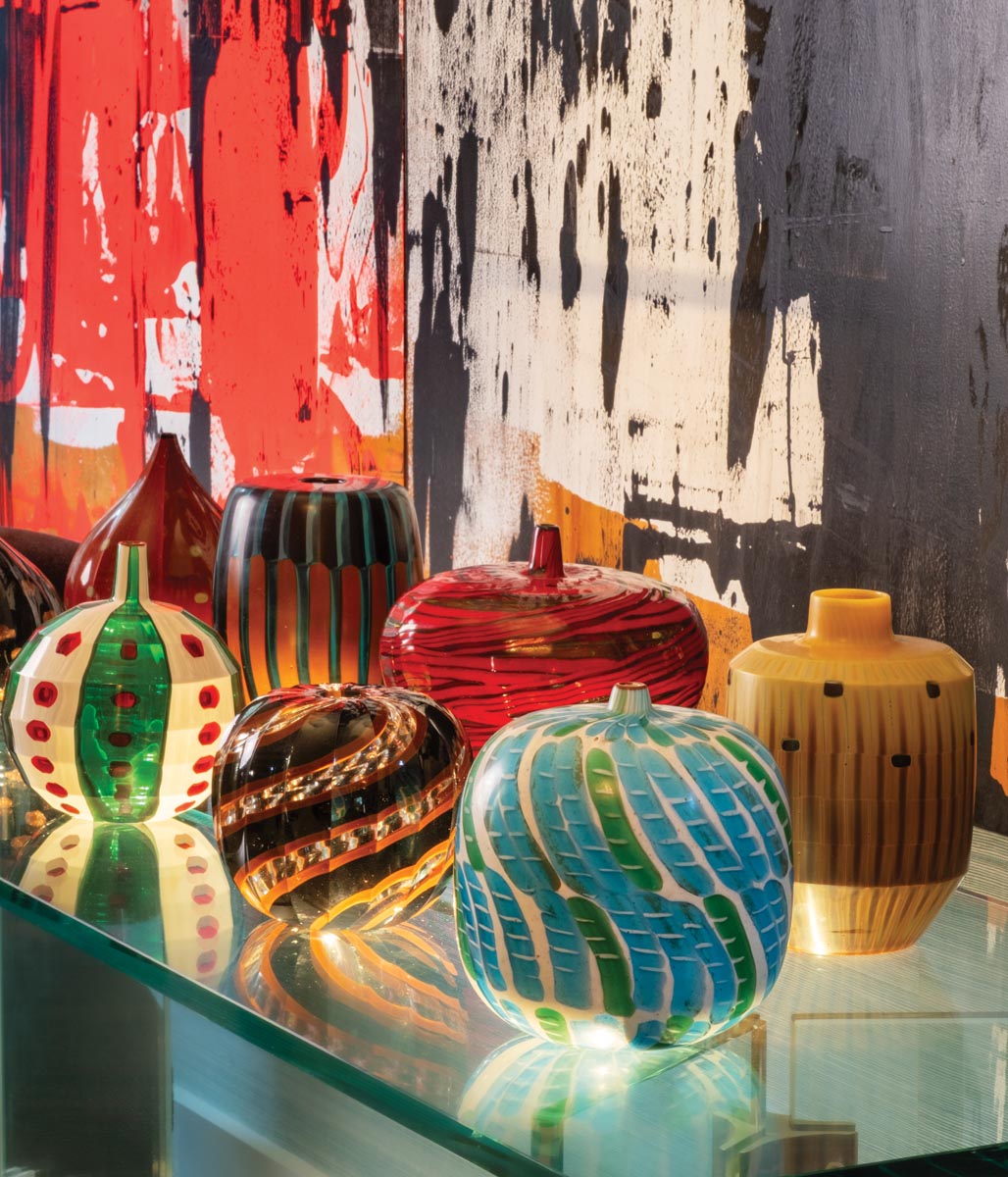
He refers to one such piece from his collection with details embedded into the solid glass that look like glistening yellow Aventurine quartzite. His favorite is evocative of a precious cabochon ruby, with red ribbons and black threads swirling around the smooth surface. A vibrant blue piece with light piercing through the glass resembles a collection of magnificent cut sapphires. In his eyes, each is a jewel of another kind.
In the times of the ancients and all through the ages, this most fragile of materials has been used for practical and decorative purposes. Venice rose to be one of the most important and celebrated centers of glassmaking, with the craft documented there as early as 982. By the late Middle Ages, the industry had flourished, and in 1291 the Venetian government ordered glass furnaces moved to the island of Murano to reduce the risk of fire in the city. Since then, generations of glassblowers, cutters, and designers have honed their craft on the island, developing techniques that remain closely guarded and celebrated today. One such master was Yoichi Ohira.
D’Humières first encountered Ohira’s work around 1997—a few years after he transferred from Sotheby’s in London to New York—when he visited the Fifth Avenue apartment of his friend Pierre Durand.
“Pierre was the co-founder of the renowned Chinese Porcelain Company and had amazing taste,” d’Humières says. “There was a cluster of unbelievable glass on a table, including a red one that I completely flashed on and said, ‘Oh! What is that?’ He told me about Yoichi Ohira and [to go] see Barry Friedman at his downtown gallery. I knew Barry as a dealer of Art Deco furniture, but, sure enough, on one of the shelves were unbelievable works like that. I got really excited.”
At the time, d’Humières was a junior specialist at Sotheby’s and unable to afford Ohira’s art. But Friedman was willing to make a deal.
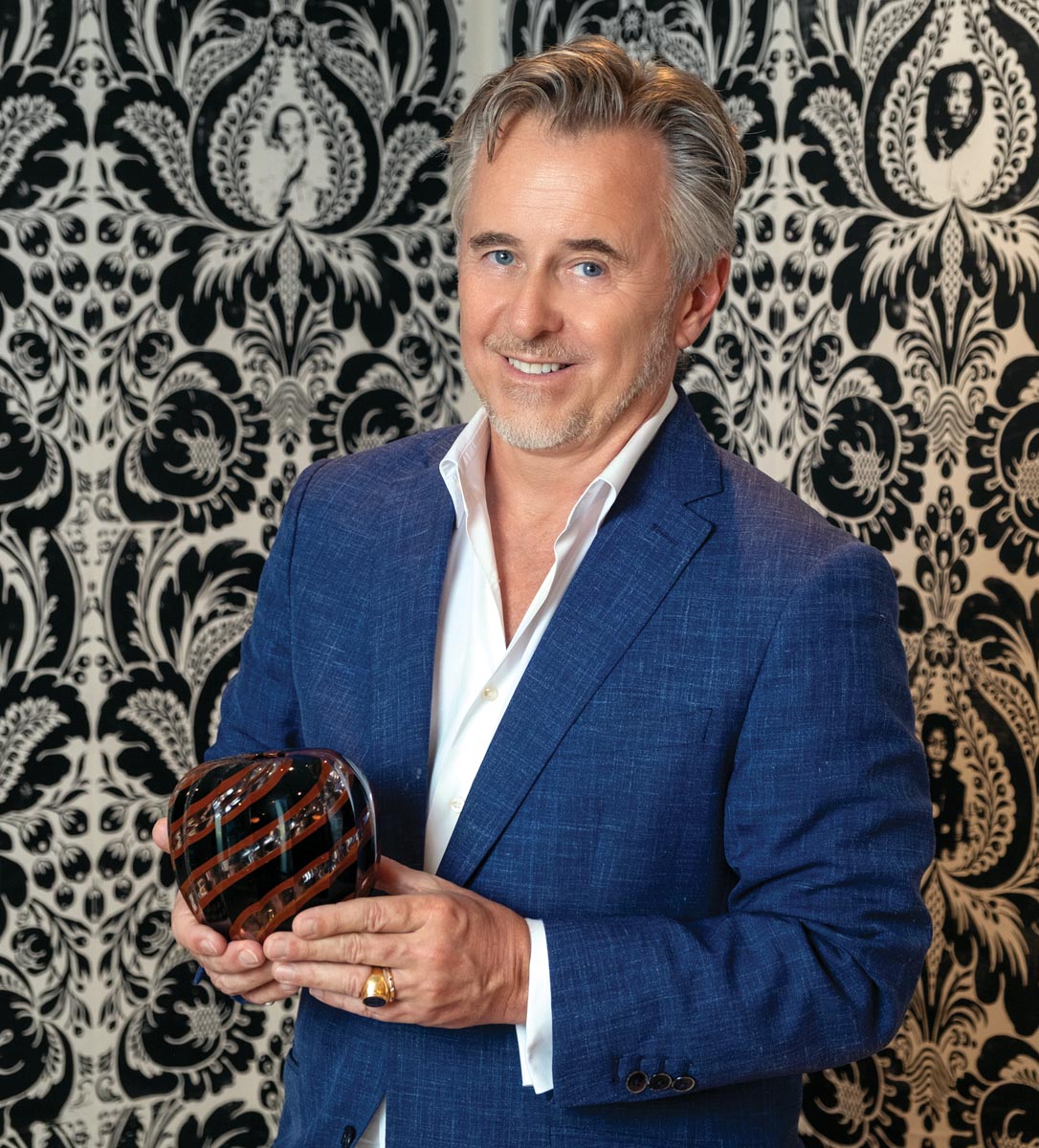
“He told me to select one and he gave me what we call ‘term,’” d’Humières explains. “He said, ‘Take one or two years to pay, and when you’ve finished paying, you will get it.’ I was so happy to do that.”
D’Humières credits Friedman for helping to launch Ohira’s international career, as he mounted the first New York gallery exhibition of his work in 2000. And Friedman’s willingness to let d’Humières pay for the works on term enabled him to collect them over time.
“When I finished paying for the first one, I selected the second one and so on,” he adds. “Barry is still alive, and I do see him and buy them with a little less term.”
Ohira was born in Japan in 1946. D’Humières recounts that, around the age of 12, Ohira read a book about a
Japanese glassmaker who fell in love with a Finnish gallerist. “The description in the book about the glass was so poetic, he felt the call to glass.”
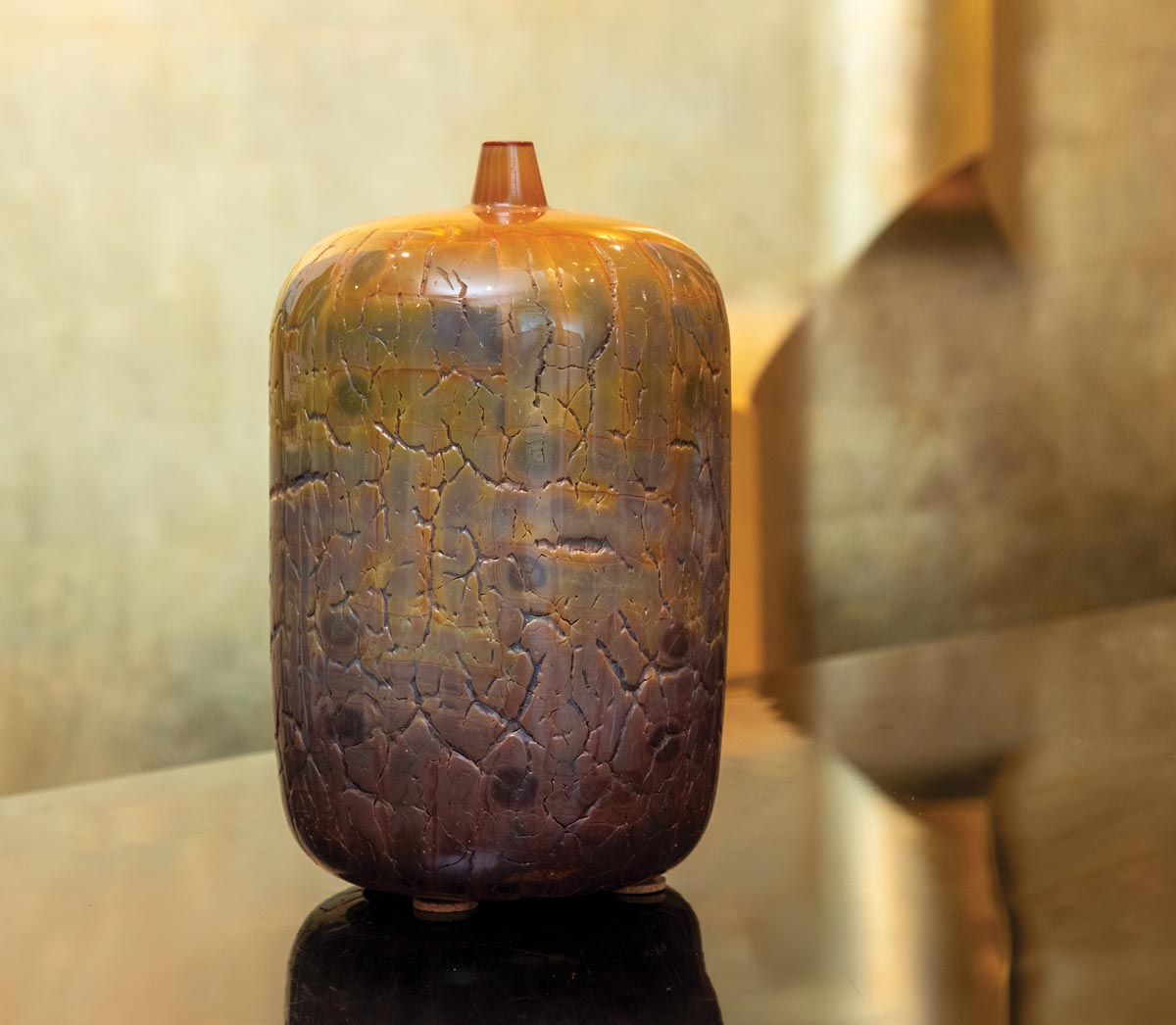
Ohira graduated from the Kuwasawa Design School in Tokyo in 1969 and began his career as an apprentice glassmaker at the Kagami Crystal Company. In 1973, he moved to Venice to study sculpture at the Accademia di Belle Arti. Ohira’s relationship with Egidio Costantini, founder of the Fucina degli Angeli glassworks and a master of glass sculpture, helped evolve his personal sensibility beyond purely decorative forms. He blended Eastern forms and aesthetics with Venetian techniques, creating a distinctive collection at De Majo glassworks in Murano, where he was appointed artistic director in 1987. That same year, his work earned him the prestigious Premio Selezione at the Premio Murano glass art competition.
In 1992, Ohira began collaborating with master glassblowers Livio Serena and Andrea Zilio and glass carver Giacomo Barnini to craft one-of-a-kind pieces. He was the first artist in Murano to sign each piece with the date of production and the names of the glassblower and glass carver, in addition to his own, showing his respect for their skills and the close collaboration that brought his works to life. This gesture hearkened to the tradition in Japanese woodcuts where both the artist’s name and the name of the carver were included on the print.
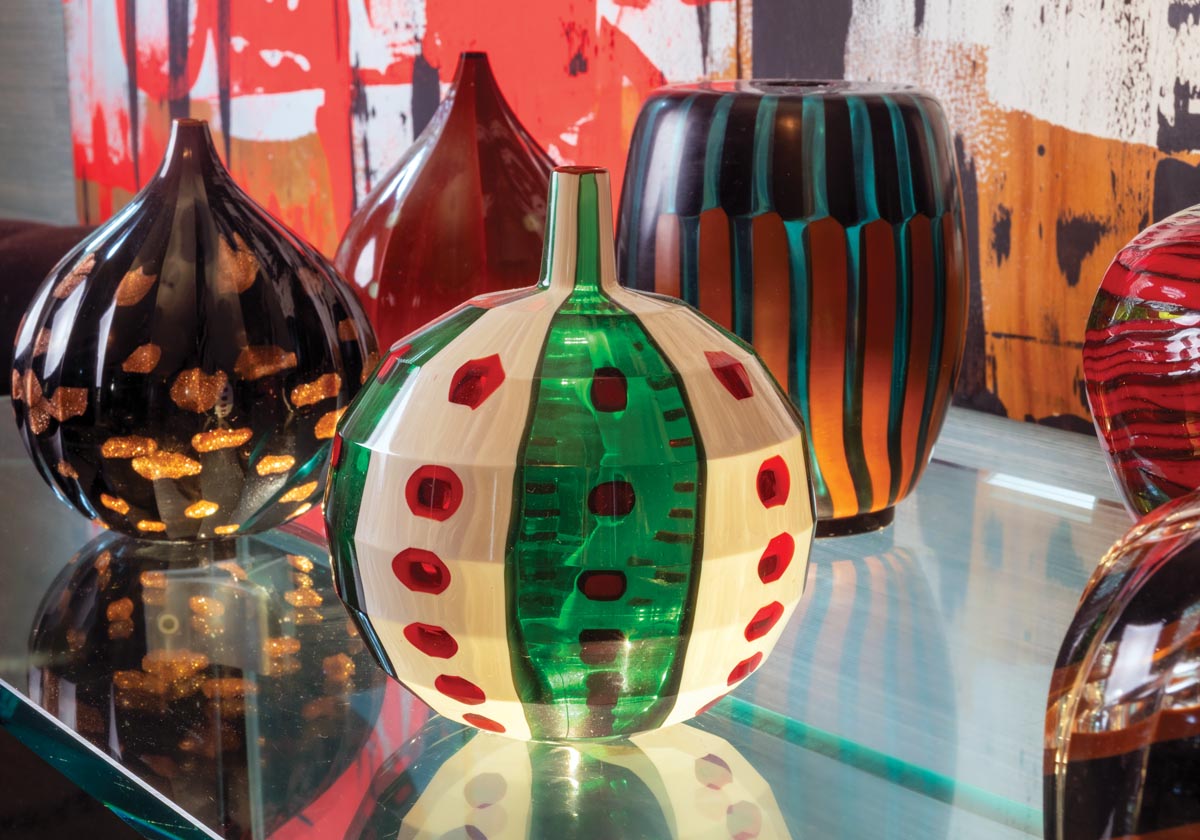
Over years of intense work, Ohira pushed the boundaries of each phase, adapting ancient techniques in new ways to incorporate architectural forms into glass. He experimented with opacity and translucency, effects resembling Japanese lacquer and wood, and an array of vibrant and milky colors in unexpected combinations. He drew inspiration from the elements of nature, observing the shapes of fruits, vegetables, and geological formations, as well as the colors created by the rise and fall of the waters in the Venetian lagoon.
The pieces in d’Humières’ collection mostly come from the middle period of Ohira’s work, from the mid-1990s to 2010. Each sits comfortably in the palm of the hand, and most are around five to six inches in height. He says he did not decide to collect pieces in the order of Ohira’s different phases of his career as an art historian should but rather made his selections completely “from the heart.”
D’Humières regrets never meeting Ohira. “I was not in New York at the time of his exhibition, and although I visit Venice every year, I never got to meet Yoichi.”
Ohira died in 2022, leaving behind works in private collections and museums around the world, including the Musée des Arts Décoratifs in Paris, the Metropolitan Museum of Art in New York, the Victoria and Albert Museum in London, and the Koganezaki Glass Museum in Shizuoka, Japan. D’Humières’ pieces are displayed together on a glass table and lit from beneath, showing off to perfection their individual jewel-like characteristics.