

Crystal stemware catches the glow of candlelight as guests settle into the members-only lounge at Jupiter’s 1000 North for an intimate six-course dinner where every detail, from the pacing of service to the vintage and temperature of each wine, has been carefully considered. Servers move gracefully between courses as prized wines are poured and discussed with the kind of reverence usually reserved for fine art.

At the center of the evening is Bill Terlato–president and CEO of Terlato Wine Group (TWG) and founding partner of the elegant waterfront club and restaurant—who guides guests through each pairing with the polished ease of someone equally comfortable in a Napa vineyard as he is in a Michelin-starred restaurant. For the third-generation luxury wine titan, a pairing dinner is about far more than choosing the right bottle for the right course. It is the culmination of nearly nine decades of family history and an uncompromising pursuit of excellence.
Today, TWG is one of the leading forces in the luxury beverages industry, producing and representing acclaimed wines, spirits, and beverages from California, Italy, France, Australia, New Zealand, Washington State, Austria, Argentina, Scotland, Ireland, Japan, Mexico, and Trinidad and Tobago. Despite the family’s global success, its origins remain deeply personal.
“Our family is 88 years in the industry,” says Terlato, whose maternal grandparents began in 1938 with a single retail wine shop in Chicago. In 1946, the family expanded into wine distribution when Anthony Paterno, Terlato’s grandfather, purchased Pacific Wine Company. By the 1960s, they were importing Italian wines, a natural extension of both their heritage and growing passion for European wine culture. Terlato joined the company in 1981—during a period of rapid expansion that included marketing U.S. brands and importing others from around the world—and would soon help shape one of its defining turning points.
In 1994, after being appointed president and CEO, Terlato decided to shift the company’s focus toward wine production and vineyard management. The vision was based in experience. Years earlier, he had worked on the harvest at the acclaimed Robert Mondavi Winery, where he first understood the long-term potential of winery and vineyard ownership.
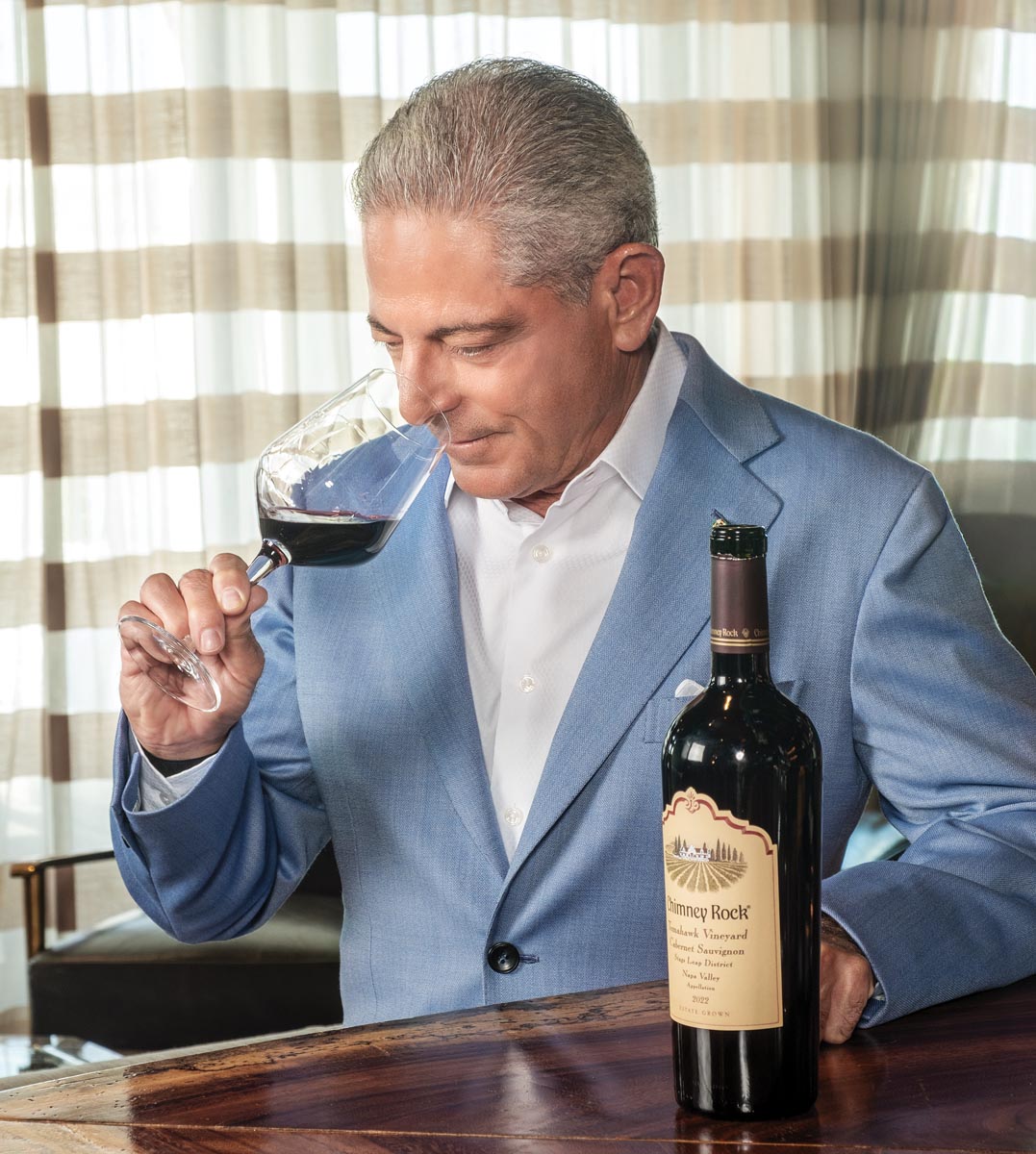
“I convinced my dad that we should own the wineries at a time when everyone was talking about the internet and how it was going to eliminate all the middlemen,” Terlato recalls. “If we own a brand or a winery, wherever the market is, we’ll have a customer.”
With the purchase of Napa Valley’s Rutherford Hill Winery in 1996, the family completed its evolution from retailer to producer—and fell in love with the vintner life. Additional vineyards followed in Napa, Sonoma, Santa Barbara, Washington State, Italy, and France as TWG steadily expanded its global footprint, eventually owning and operating more than 1,100 vineyard acres worldwide while maintaining its boutique-quality approach.

The company’s guiding philosophy is rooted not in scale, but in precision. “There’s a difference between good wine and great wine,” Terlato says. “Good wine is made in the winery. Great wine is made in the vineyard.”
For Terlato, greatness begins with discipline and restraint. While some growers maximize vineyard yields, his team intentionally limits production to preserve intensity and character. “We could grow seven or eight tons of grapes on every acre of vineyard,” he explains. “Instead, we crop it somewhere from two and a half to four tons because the quality of the fruit is better if you’re not asking too much of the vine.”

Many standout TWG wines were showcased during this dinner, which featured food by 1000 North’s executive chef, Jeffrey Perry.
“What was exciting about working with Bill in creating this dinner was seeing how specific menu items illuminated new dimensions in the wine by adding depth, tension, or freshness—while the wine, in turn, revealed hidden notes in each of the dishes,” Perry explains. “Whether it’s the bright acidity in the wine that awakens a rich dish or a subtle earthy note that suddenly ties everything together, those moments of discovery are what make a meal distinctive and memorable. Ultimately, that’s what it’s all about.”

Terlato agrees. “The true art of wine pairing is like putting together an outfit,” he says. “Balance and flow are everything. Great chefs use ingredients in such a way that creates a holistic flavor. You don’t necessarily taste every ingredient individually—you just know it’s distinctive, and you want it again and again. Wine should neither overpower a dish nor disappear beside it. Instead, the goal is harmony, where acidity, texture, fruit, earthiness, and richness complement the dish like ingredients in a well-composed recipe.”
Ultimately, Terlato believes wine is about creating memorable experiences: meaningful exchanges around a table, shared moments, and the emotional resonance of an unforgettable meal.
“What’s been nice about our business is we’ve been on every side of the table,” he says. “We have a customer-centered focus because we understand the needs of the people we work with.”
As this evening at 1000 North came to a close, conversations lingered over the final pours and half-empty glasses. Guests savored the last bites of dessert while Terlato discussed vineyards, vintages, and the endless pursuit of balance. “You can always tell which wines people like best,” he says with a smile. “It’s the glass that empties first.”

Musings on the Menu
Bill Terlato reflects on the evening’s sips and pairings

Welcome Cocktail: Paper Plane with Blackland Bourbon, Nonino Amaro, and Nonino Aperitivo
“The aroma and flavor of the bourbon combined with the hint of sweetness from the amaro and aperitivo—and citrus from the lemon juice—set the tone for the evening and courses ahead.”
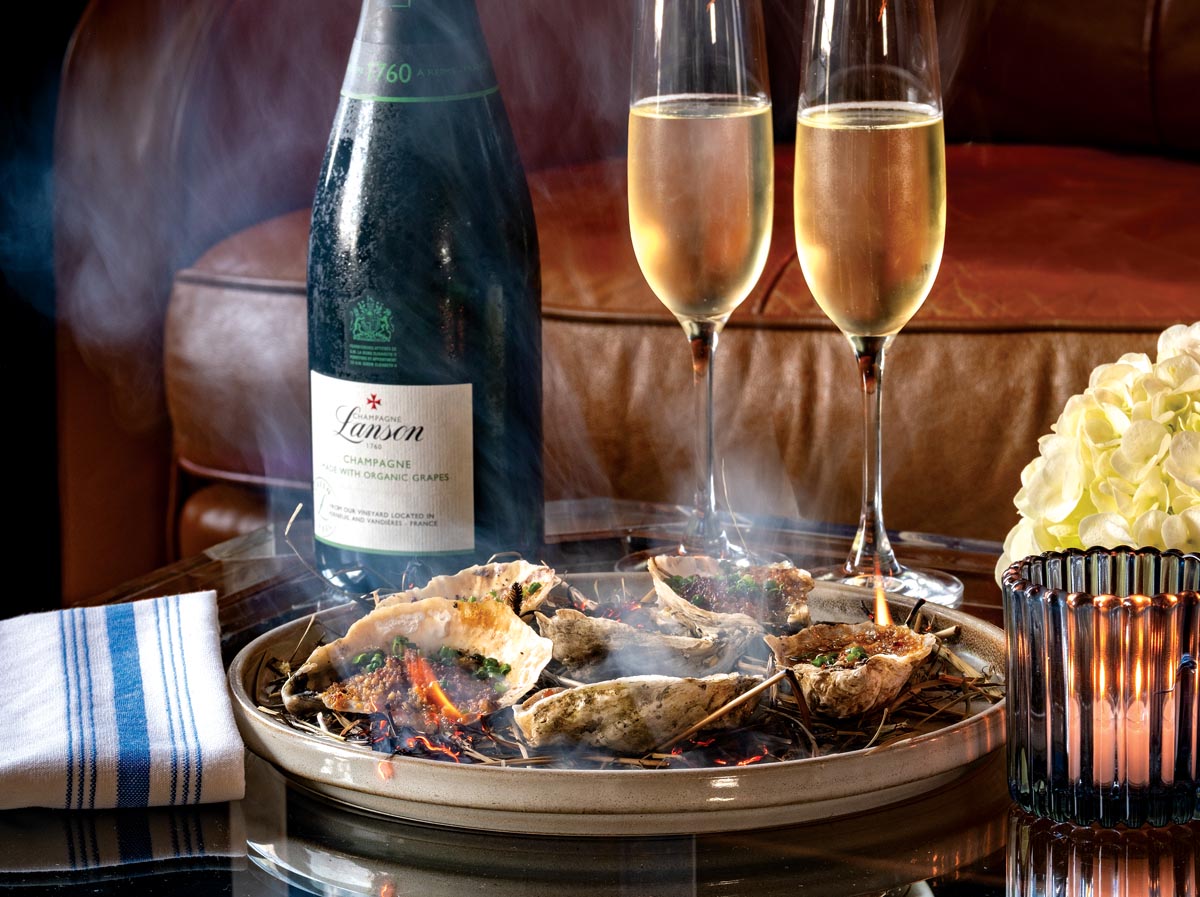
First Course: Bourbon and hay-roasted oysters with Tasso ham, brown butter, and corn bread
Pairing: Lanson Green Label Brut Organic Champagne, Northeastern France
“The richness of the roasted oyster and brown butter complement the organic Champagne’s bright acidity and fine bubbles that elevate the dish without overwhelming its delicate nuances.”

Second Course: Street corn Caesar salad with cotija cheese, corn bread crumble, and charred corn relish
“While no wine accompanied this course, the salad acts as a transition within the dinner by offering smoky, creamy, and slightly sweet flavors that prepare the palate for the deeper, earthier dishes ahead.”
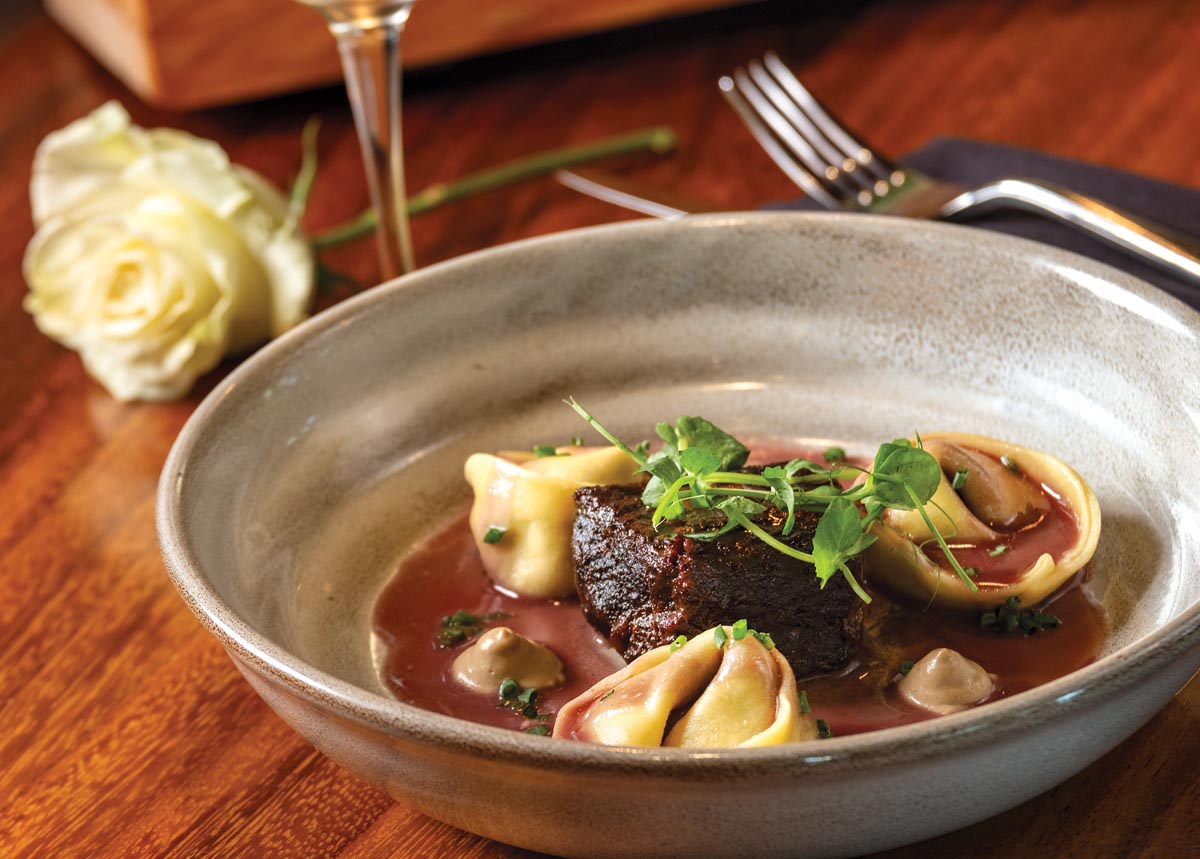
Third Course: Short rib tortellini with porcini puree and beurre rouge
Pairing: Terlato Vineyards Pinot Grigio, Northeastern Italy
“This wine’s acidity, minerality, and structure complement the richness of the short rib while allowing the earthy porcini notes to remain expressive and refined.”
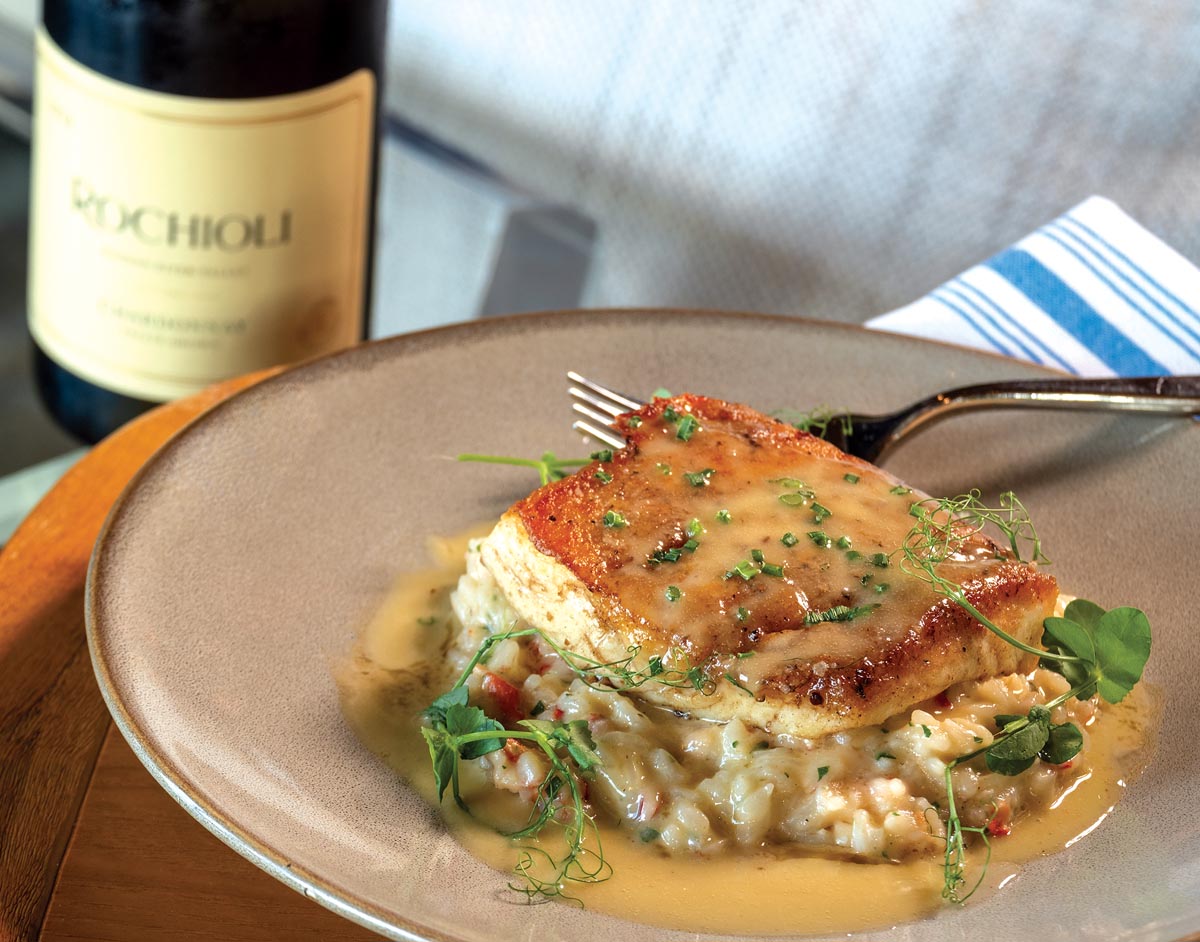
Fourth Course: Pan-seared halibut with Parmesan risotto, Maine lobster, and lemon butter
Pairing: J. Rochioli Vineyards Chardonnay, Russian River Valley, Sonoma County, California
“This Chardonnay’s layered texture and restrained oak profile mirror the luxurious richness of the lobster and risotto while maintaining enough freshness to complement the delicate halibut. It’s one of my favorite Chardonnays from California, from a family of really accomplished winemakers that we’ve been working with for over 40 years.”
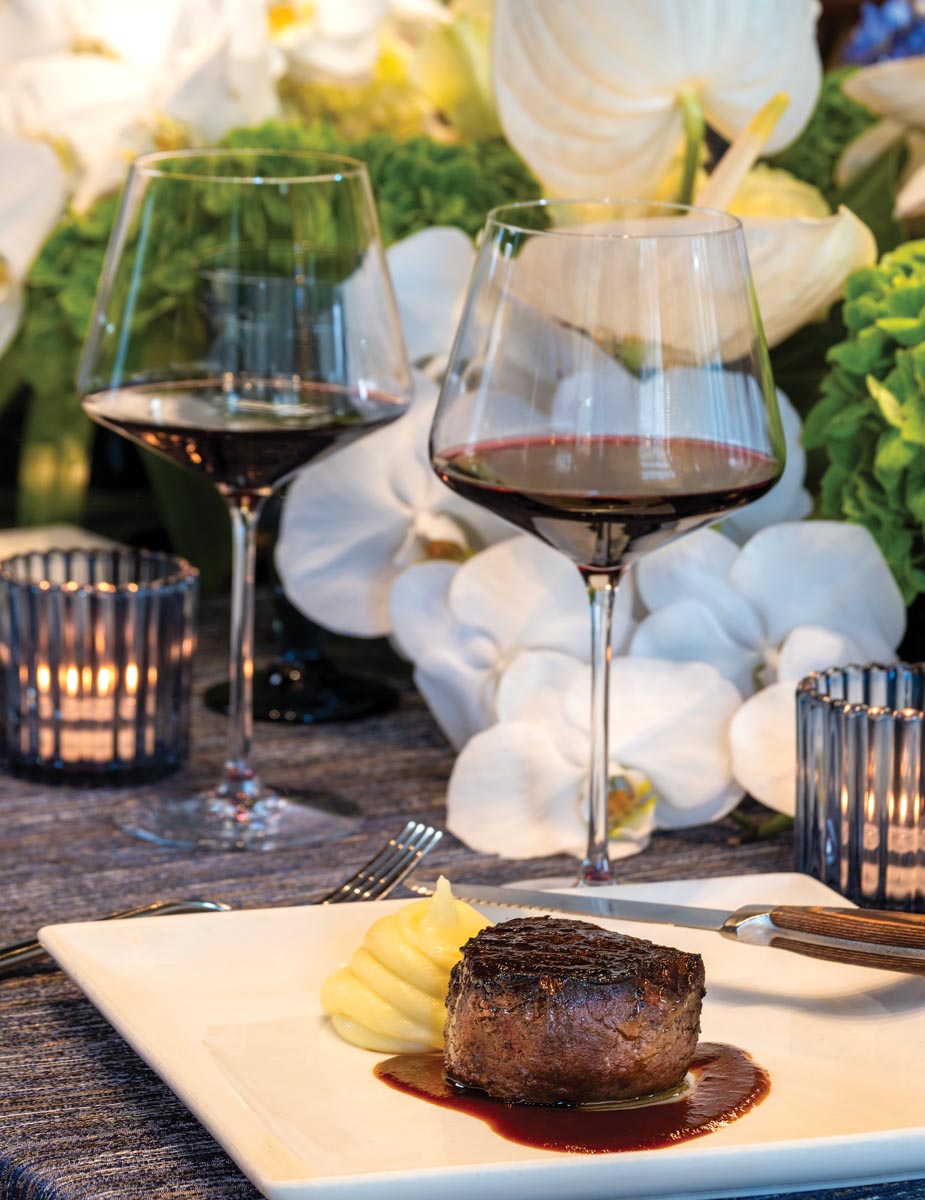
Fifth Course: Petite filet with Yukon gold potato puree and bourbon Bordelaise
Pairings: Chimney Rock Winery, Tomahawk Vineyard Cabernet Sauvignon, Stags Leap District, Napa Valley, California; and Klipsun Vineyard Cabernet Sauvignon, Red Mountain, Washington.
“Nothing goes better with steak than Cabernet. It’s one of the great classic pairings. I added the Klipsun, which is also a Cabernet Sauvignon, but from a different region. As soon as you smell it, you realize, even though it’s the same grape, it’s different. It’s one of the reasons why we love that vineyard and were fortunate enough to be in the right place at the right time to acquire it.”
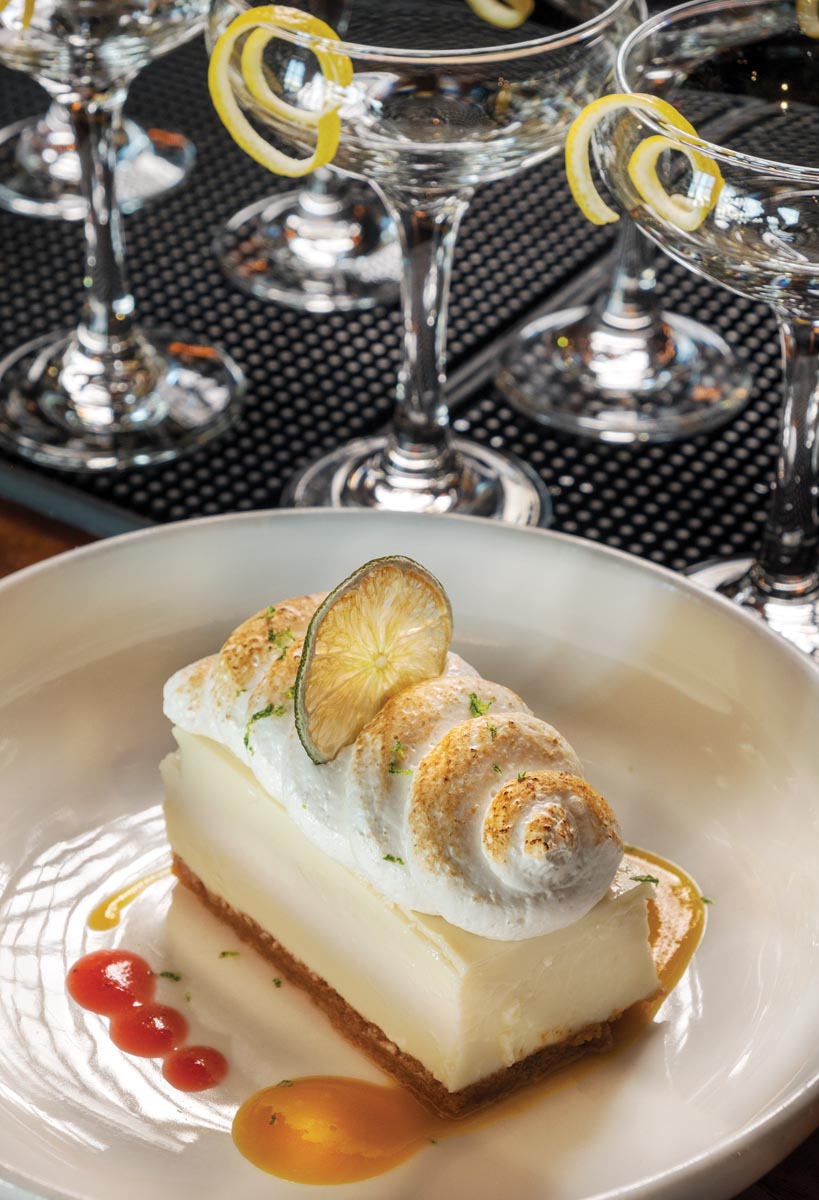
Dessert: Key lime pie with passion fruit gel and meringue
Pairing: Seven Daughters Moscato, Veneto, Italy
“For this lighter, refreshing dessert, I chose a Moscato from Italy’s Piemonte region, which has a floral sweetness that complements the dessert’s tart citrus and tropical fruit notes beautifully.”