


Gluten has become wellness culture’s favorite villain—a group of wheat proteins blamed for an array of modern ailments, from bloating to brain fog. But the problem may be more complicated. Flour, fermentation, processing, even the way we eat have changed dramatically. Before you break up with the breadbasket, it’s worth asking: when wheat seems to be causing symptoms, is gluten always the culprit?
Not All Bread is Baked Equal
It is crucial to look beyond gluten and consider the grain itself. Ancient grains like einkorn, emmer, and spelt are prized for their nutritional profiles and less-modified genetics. They aren’t necessarily lower in gluten; their protein profiles simply differ from those of modern wheat. Then there’s what happens before wheat reaches the mill. Conventional wheat can be treated with pesticides during cultivation, and residues can remain on the harvested grain (though there are legal limits). Processing matters, too. Many commercial breads use faster fermentation and may contain additives. Long fermentation, on the other hand, can break down some wheat proteins and reduce fructans, the fermentable carbohydrates that can cause bloating.
Is it Really Gluten?
Consider this: You eat pasta at 8 p.m., alongside a cocktail, appetizers, a restaurant-sized entrée, and dessert. You leave bloated and blame the pasta. But you didn’t exactly run a controlled experiment. Meal size, alcohol, fat, added sugar, eating speed, and the pasta itself can all influence digestive symptoms. Before declaring gluten guilty, change one variable at a time and pay attention to the pattern.
When Gluten is the Problem
Sometimes gluten really is guilty. Celiac disease is an autoimmune condition in which even small amounts of gluten can damage the small intestine, while a wheat allergy is a separate immune response to wheat proteins. Non-celiac gluten sensitivity is murkier: the symptoms can be very real, but researchers are still untangling whether gluten or other components of wheat are responsible. If you suspect a problem, consult a physician and get tested before eliminating gluten; celiac testing is most accurate while gluten is still in your diet.
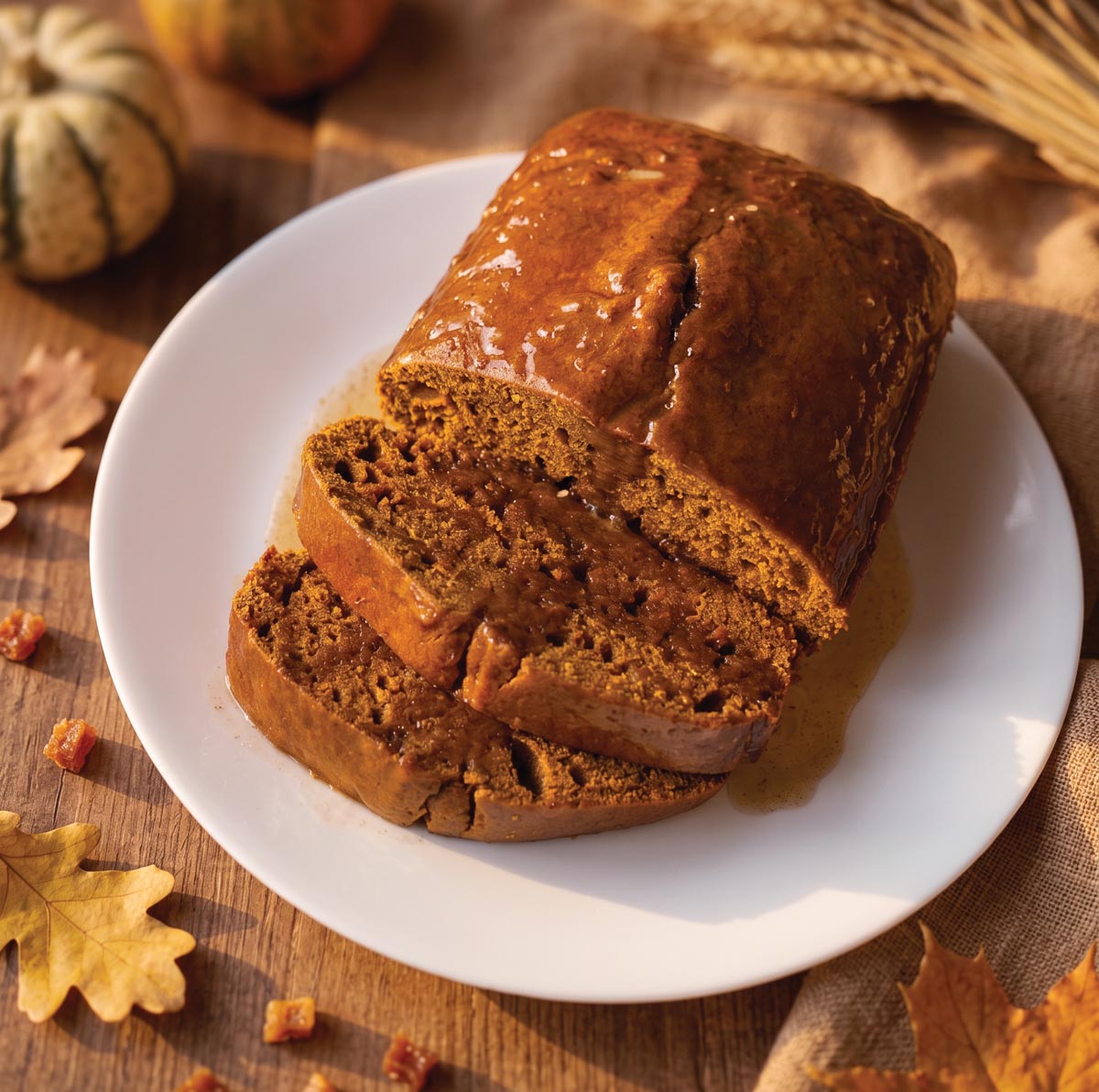
Pumpkin Chai Cake
This autumnal cake puts ancient-grain einkorn front and center
Cake Ingredients
- 1 3/4 cups all-purpose einkorn flour
- 2 tsp. baking powder
- 1/2 tsp. baking soda
- 1/2 tsp. salt
- 2 tsp. cinnamon
- 1 tsp. ground ginger
- 3/4 tsp. cardamom
- 1/4 tsp. ground cloves
- 1/4 tsp. nutmeg
- 3 eggs, room temperature
- 3/4 cup coconut sugar
- 3/4 cup pumpkin puree
- 1/4 cup maple syrup
- 1/3 cup unsalted butter, melted and cooled
- 1 tsp. vanilla extract
Maple Chai Glaze Ingredients
- 3/4 cup powdered sugar
- 1 tbsp. maple syrup
- 1-2 tbsp. milk, depending on desired consistency
- Pinch of cinnamon
- Pinch of cardamom
- Pinch of salt
Preheat the oven to 350 degrees Fahrenheit. Butter and line a loaf pan with parchment paper.
In a large bowl, whisk the flour, baking powder, baking soda, salt, and spices. In a separate bowl, whisk the eggs and coconut sugar until light and foamy. Add the pumpkin puree, maple syrup, butter, and vanilla extract, then whisk until smooth. Gently fold the dry ingredients into the wet ingredients until combined.
Pour the batter into the prepared pan and smooth the top. Bake for 30 to 38 minutes, until a toothpick comes out clean or with a few moist crumbs. Cool in the pan for 15 minutes, then transfer to a wire rack to cool completely.
In a third bowl, whisk the glaze ingredients until smooth and pourable. Drizzle over the cooled cake and finish with cinnamon.